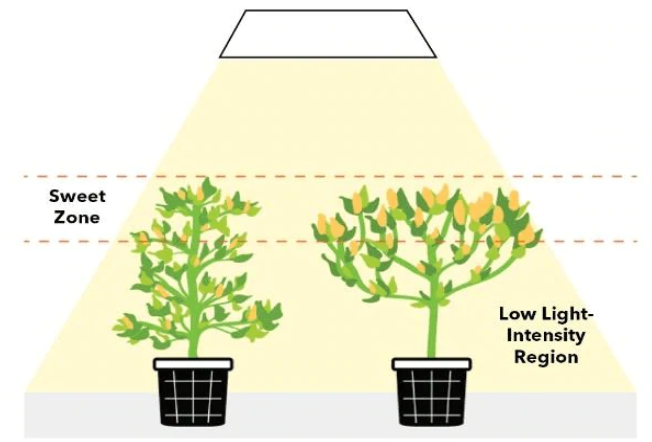
Next, this article will reveal how to choose plant lights according to the planting area, or how many plants to match according to the plant lights. There is no one-size-fits-all answer to this question, as he will set it based on several different conditions
1. Need to know the plants which is going to be planted
This step is mainly to understand the required light intensity of the plant, which is generally expressed by a unit DLI (daily light integral). For details, please refer to our article.(https://fetonlight.bossgoo.com/news/how-to-decide-the-lighting-distance-of-your-led-grow-light-78726.html)
In short, 24 hours a day, plants need to have light time and dark period in different growth stages. Because the light time of a day is limited, there will be a requirement for the instantaneous light intensity of the lamp, and this requirement is PPFD.
So we first need to know the DLI and optimal photoperiod required by the plant and its various growth stages.
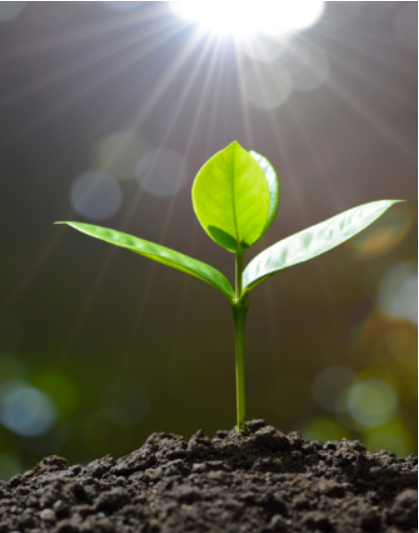
The canopy generally refers to the topmost part of the plant that receives light most preferentially. Why canopy coverage does not necessarily equal the canopy area of a grow tent. Because plants generally cannot occupy the entire area of the planting space during the planting process, which means that some space is wasted. There are no plants in this area, so there is no need to consider that the entire area needs to be illuminated.

Generally, different growth stages of plants require different light intensity, which can be adjusted by adjusting the hanging height. At this point, if you do not have professional measuring equipment, then ask the lamp seller to provide a PPFD chart.
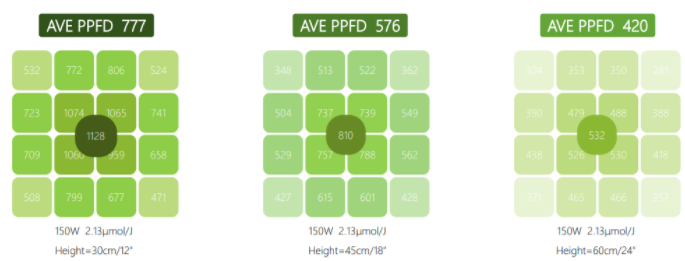
Because most of the PPFD of the plant lights on the market are fixed, when you want to change plants or increase the planting area, you will have to consider changing a plant light to adapt to it, but there are not many lamps, so be careful to confirm before setting up Well the above things. Once set up there is very little room to change.